Photon Ecstasy
 |
Photon Ecstasy is a growing catalog of compositions, created in collaboration with composer–performer Melissa Grey, that engages music, sound, interactive light, and science fiction. Photon Ecstasy is an expansion of the mythology created by Dan Rose in his artist book, The DNA–Photon Project, which tells the story of a top–secret government project that converted the DNA of a young woman into photons and beamed them out to the stars in order to mate with intelligent life and expand humanity into the far future universe.
Photon Ecstasy is an "endless composition"—new variations and collaborators join the continually evolving world of this project. Our intent is to never arrive at a completed, definitive version of the music. It will continue to grow and expand as we grow as artists. The list below details the major milestones of Photon Ecstasy, beginning with the recent release of PETITE ecstasy, an album of music from this project, and tracing back to the commission for Photon Ecstasy (HD 7924) from the University of Pennsylvania's Kislak Center for Special Collections, Rare Books and Manuscripts.
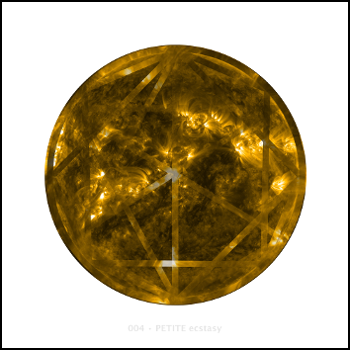
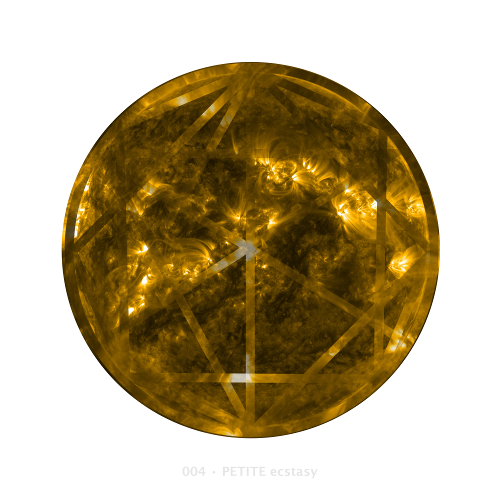
PETITE ecstasy (2018)
Melissa Grey (benjolin, beats, programming)
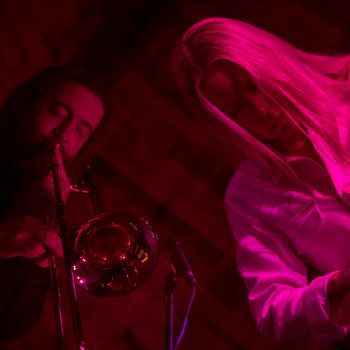
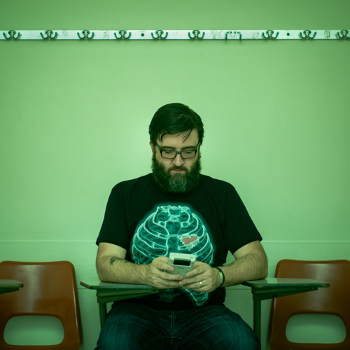
David Morneau (trombone, Game Boy, beats, programming)
Jessica Bowers (mezzo-soprano)
Dan Rose (voice)
music composed by: l'Artiste ordinaire
inspired by The DNA-Photon Project by Dan Rose
mixed by: l'Artiste ordinaire
mastered by: Eric Honour
"History repeats: l'Artiste ordinaire returns to the expansive universe of Photon Ecstasy to survey for slippery drones, sparkling beats, and hallucinatory, shifting textures. Like the light from distant stars, these sounds arrive from the past, focused by the lens of the duo's inscrutable and immersive creative process.
"This process is the sound of PETITE ecstasy. The gravitational force generated by the combination of Grey's benjolin synthesizer and Morneau's trombone pull together programmed beats, Game Boy chimes, a recitation by Dan Rose, and the palatial voice of mezzo-soprano Jessica Bowers.
"PETITE ecstasy is born from the nebula left behind by Photon Ecstasy."
Quiet, friends [formerly Kepler–19] (2017)
[mezzo–soprano, benjolin synth, trombone]
collaborators: Melissa Grey, composer–performer; Jessica Bowers, mezzo–soprano;
duration: ~40 minutes
Quiet, friends is inspired by the Message From Earth, a gold–plated record that was launched into space on the Voyager spacecraft as an example of Earth culture for whatever extraterrestrial intelligence finds and decodes it. Quiet, friends incorporates materials from Vincenzo Bellini's La Sonnambula.
Ao Vivo no Casarão | Lado B | Parte 03 | Quiet, friends
[Released November 20, 2018]
Direction and Production : Cristina Müller and Yuri Tavares
Music composed by: Melissa Grey & David Morneau
Music performed by: Melissa Grey, David Morneau, & Jessica Bowers
Cinematography and Camera: Cristina Müller, Lydia Cornett, and Yuri Tavares
Sound recording: David Morneau, Michael Campos and Miguel Tang
Editing and color correction: Cristina Müller
Mixing: Melissa Grey, David Morneau, and Miguel Tang
Conception: Cristina Müller, Giuliano Rossi and Yuri Tavares
"Ao Vivo no Casarão is a docu-music web series that portraits independent musicians of different styles while they perform in unexpected environments."
music begins at 4:25
 |
 |
 |
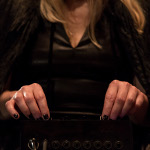 |
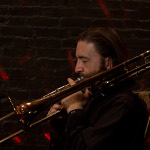
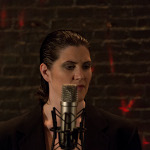
performance documentation: Ao Vivo no Casarão video shoot
Trappist–1 (2017)
[trombone, bass clarinet, baoding balls]
collaborators: Melissa Grey, composer–performer; Thomas Piercy, bass clarinet
duration: 11 – 35 minutes
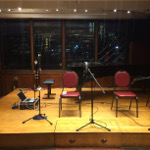
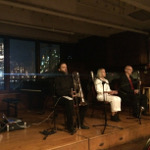
Trappist-1 is an open-form performance that uses clouds of sounds created by the performers (trombone, bass clarinet, baoding balls) and elongated by live processing to activate the physical space in which the performance happens. These clouds are separated by indeterminate periods of silence, drawing the listener's ears to the other sounds present in and around the performance space. Trappist-1 and its environment penetrate each other in a blurring of time and space.
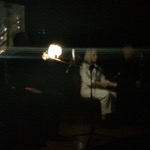
Trappist-1 is performed in the dark, using a custom trombone mute that lights up in response to sound (created by Robert Kirkbride, Ezgi Ucar, Gregory Beson) to illuminate the perfumers and the space. The recent addition of live visualist Marc Fiaux to the collaboration brings responsive video that highlights the form and effect of the music.
 |
 |
 |
 |
performance documentation
Kepler–37 (2017)
[blindfolds, benjolin synth, salt, sculptures, microscope, projection]
collaborators: Melissa Grey, composer–performer; Nicole Antebi, animator
duration: 35 – 45 minutes
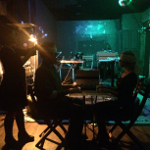
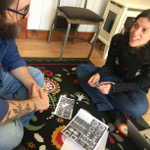
The star Kepler–37 is orbited by some of the smallest exoplanets yet known. These were discovered when scientists sonified data from the Kepler Spacecraft and listened for telltale variations. Melissa and I perform a duet on the benjolin synthesizer, which was designed as a chaotic circuit, so that while it can be guided, it can never be fully controlled in a predictable manner, requiring constant attention and intentional listening. We are blindfolded, which adds another layer of listening to the process. We can never be sure what all of the knobs are set to, and what the other person is doing at any moment unless we blindly discover their hands.
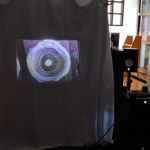
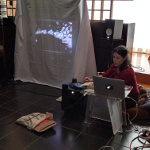
We collaborated with artist and animator Nicole Antebi, who created live visuals by projecting her examinations of small objects and salt (on a Chladni plate) with a USB microscope.
workshop performance to test blindfolds at Strange Stage, The Experimental Showcase #2
 |
 |
 |
 |
rehearsal documentation
DP Leonis b (2016)
[Merlin Music Machine, Nintendo Game Boy, toy piano, processed voice]
collaborators: Melissa Grey, composer–performer; Elizabeth A. Baker, pianist
duration: ~12 minutes
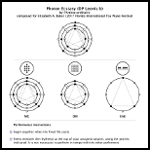
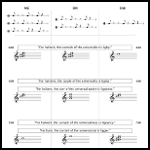
Composed to feature Elizabeth A. Baker at the 2017 Florida International Toy Piano Festival, DP Leonis b is for a trio of toy instruments that perform interlocking patterns based on a single rhythm. The density of the sounds gradually shifts from the electronics to the toy piano, shifting the narrative focus from the distant star system to the young woman traveling there.
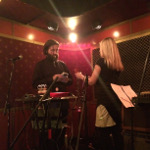
For this performance at Pete's Candy Store, we are joined by percussionist Payton MacDonald on glockenspiel.
 |
 |
 |
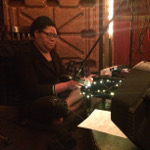 |
score & performance documentation
HD 7924 (2016)
[benjolin synth, Merlin Music Machine, Nintendo Game Boy, trombone, field recordings, beats, processed voice]
collaborators: Melissa Grey, composer–performer; Dan Rose, author; Robert Kirkbride, trombone mute designer; Gregory M. Beson, trombone mute fabricator; Ezgi Ucar, creative technologist; Rachel Cheetham–Richard, documentation
duration: ~50 minutes
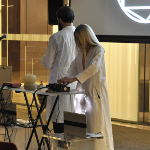
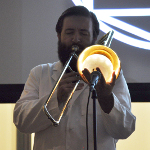
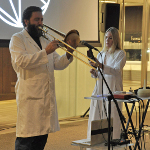
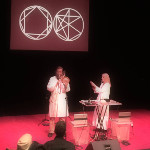
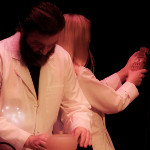
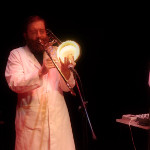
The first installment of Photon Ecstasy was commissioned by and premiered at the University of Pennsylvania's Kislak Center for Special Collections, Rare Books and Manuscripts in conjunction with the exhibition of Dan Rose's artist books, Plaisirs Arbitraires | Arbitrary Pleasures (October 2016). In it, we established the world of the project. Melissa and I developed a collaborative creative practice based on improvisation and sonic exploration. It is guided by a wide range of ideas that includes the science of deep space exploration, the geometrical studies of rhythm pioneered by Godfried Toussaint, and the techniques of Ouvroir de littérature potentielle (Oulipo).
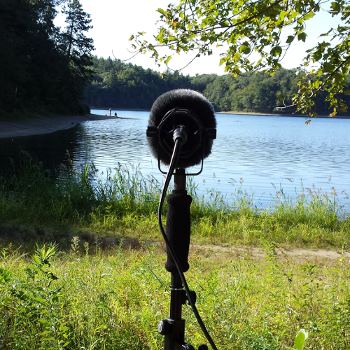
The sound of Photon Ecstasy is rooted in the instruments we have chosen to use: trombone, benjolin synthesizer, Nintendo Game Boy, and Merlin (a hand–held electronic toy from the 1970s–80s), and the combination of these instruments with processed voice samples, beats, and field recordings of insects and wildlife. Variations of these ideas and sounds run through all subsequent Photon Ecstasy pieces.
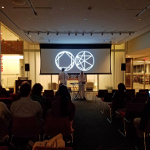
HD 7924 World Premiere performance at the Kislak Center for Special Collections, Rare Books and Manuscripts, University of Pennsylvania Libraries, Philadelphia, PA
 |
 |
 |
 |
 |
 |
 |
 |
performance documentation
|
|
| ||||||
|
|
|